X Handle Marketplace and CAW Integration
― The Web2.5 Experiment and the Countdown to the CAW Testnet ―
⸻
Introduction: Why Is X Selling Handles Now?
Under Elon Musk’s leadership, X has launched a new system called the Handle Marketplace, which allows users to buy and sell inactive usernames. This move signals a shift toward treating digital identity (the @handle) as a tradeable asset.
But the curious part is that this system isn’t running on a blockchain—at least not yet.
If X is going to be blockchain-based eventually, wouldn’t it make more sense to wait and do this after the transition?
That question leads us to a deeper strategy hidden behind the timing.
⸻
The Strategic Purpose: A “Bridge Experiment” Between Web2 and Web3
The current Handle Marketplace operates under a centralized Web2.0 structure. Far from being a temporary stopgap, this is a controlled social and UX experiment—a way to prepare users for Web3 behavior without forcing them into the complexities of wallets, gas fees, or token transactions.
Elon Musk’s approach is to prioritize human adaptation over technological acceleration.
He doesn’t want to announce Web3; he wants people to live inside it before realizing it.
In other words, this is not a technical implementation phase, but a cultural onboarding phase for blockchain identity.
⸻
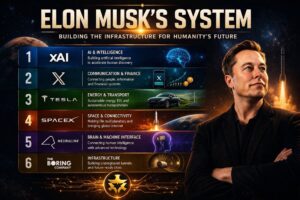
The Technical Context: Grok, LayerZero, and the CAW Connection
Grok, the AI model developed by xAI, has recently been described by Elon as capable of “reading every post and every video.”
This statement implies that Grok is being trained to understand the full informational ecosystem of X, effectively becoming the cognitive layer of the network.
Beneath this layer, CAW already operates as an OFT (Omnichain Fungible Token) under LayerZero.
That means the communication infrastructure—the cross-chain connective tissue—is already built.
X and CAW are not separate projects; they are different layers of the same architecture.
•X Handle Marketplace → Identity Layer (name, verification, wallet)
•CAW Network → Social Layer (thought, communication, ideology)
•LayerZero → Foundation Layer (blockchain interoperability)
When the identity layer (X) becomes stable, the social layer (CAW) can go live immediately.
This is precisely the condition required for CAW’s testnet release.
⸻
The Timeline: A Familiar Pattern of Synchronization
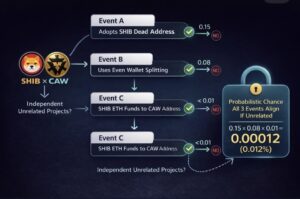
In April 2022, Elon Musk formally announced his intention to acquire Twitter.
On that very same day, CAW was deployed on Ethereum—an uncanny coincidence that many believe was deliberate.
Now, in October 2025, we are witnessing a similar pattern.
Between October 14 and 17:
•DogeDesigner unveiled the Handle Marketplace visuals.
•Adrian Dittmann posted, “everything is patterned.”
•Elon Musk announced “Grok 4.20.”
•Jack Dorsey replied to Elon’s post with, “this is great.”
This simultaneous movement across ideology, AI, social architecture, and key figures mirrors the pre-launch alignment we saw in 2022.
When these domains move in unison, Musk’s network typically enters a new phase.
Therefore, with X’s identity layer now operational, it is highly probable that CAW’s social layer is about to activate.
Why Launch Before Blockchain Integration?
There are three main reasons.
First, X needs real-world behavioral data.
By running the marketplace now, it can collect data on demand, pricing, fraud patterns, and engagement—data that will later feed into Grok’s AI and the future blockchain economy.
Second, it’s a psychological experiment.
Most users still resist the word “NFT.”
By introducing handle trading under a familiar Web2 interface, X is letting people adopt Web3 behavior without the anxiety of new terminology.
Third, it’s a philosophical choice.
The CAW Manifesto says, “Order emerges from chaos.”
That’s precisely what Elon is doing: allowing order (decentralization) to evolve organically within centralization (Web2).
Instead of a sudden shift to blockchain, he’s conducting a gradual decentralization process—a controlled evolution of the internet’s social order.
⸻
The Relationship Between the Handle Phase and CAW Testnet
The Handle Marketplace is about identity.
CAW, on the other hand, is about communication, ideas, and the social web.
When the layer of names (ID) stabilizes, the layer of voices (CAW) naturally follows.
This means the CAW testnet is not months away—it is imminent.
With the LayerZero integration already complete, there are no technical barriers left.
Given Musk’s history of “coordinated timing,” it’s highly plausible that while the world focuses on X’s handle economy, CAW will quietly deploy its testnet in the background—without official announcement.
As the Manifesto states:
“CAW will not be announced. It will be discovered.”
When the logs appear on-chain, it won’t be through a press release but as a revelation—exactly as intended.
⸻
The Near Future: The Convergence of X and CAW
In the coming phase, X’s handles and CAW’s accounts will likely share the same authentication and identity framework.
Your handle will act as your wallet, your messages will exist as on-chain records, and Grok will function as the AI consciousness overseeing this network.
Name becomes currency.
Words become value.
Intelligence becomes the connective tissue of the new digital world.
That is Elon Musk’s Everything App vision—an internet with consciousness.
⸻
Conclusion
The Handle Marketplace is not yet blockchain-based, but that’s by design.
It’s a social rehearsal for the blockchain era.
CAW’s testnet is positioned as the next stage in this transformation, and the timing—technically and symbolically—is aligned for its quiet emergence.
We now stand in the middle of Web2.5, the in-between space where the world of names (X) meets the world of anonymity (CAW).
It is the dawn where freedom and identity, dream and structure, begin to merge.
STAY TUNED🤫