
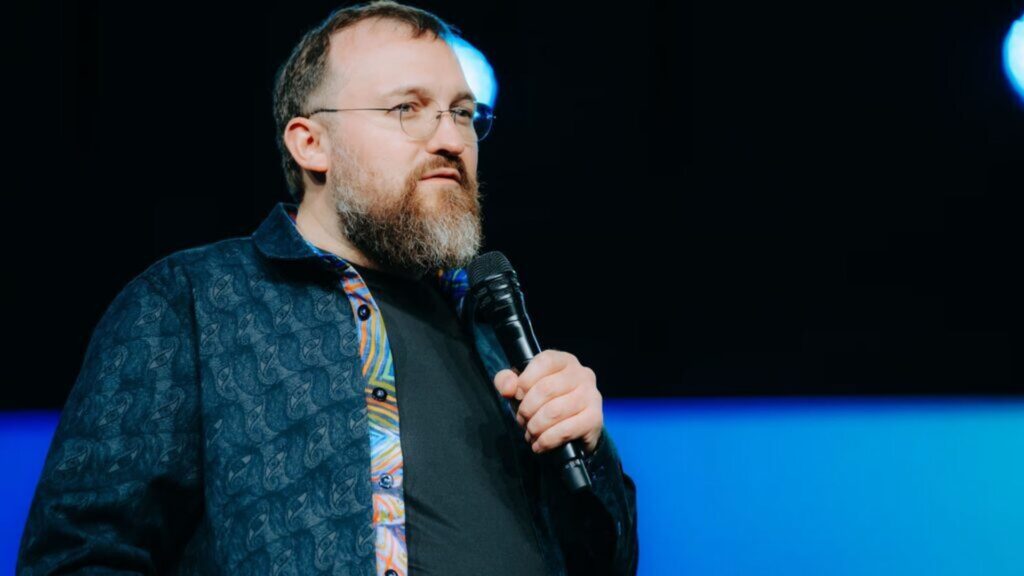
Who Is Charles Hoskinson?
—The Philosopher-Mathematician Designing Civilization Through Code
🔹 Basic Profile
- Name: Charles Hoskinson
- Born: November 5, 1987 (Hawaii, USA)
- Nationality: American
- Profession: Mathematician, blockchain developer, philosopher
- Known For:
- Co-founder of Ethereum
- Founder of Cardano (ADA)
- CEO of IOHK (Input Output Global)
- Advocate for decentralized governance, self-sovereign identity, and post-national financial infrastructure
🌍 His Core Belief:
Money is not just a medium — it is a reflection of human civilization’s structure.
Charles Hoskinson doesn’t just build blockchains — he reimagines the philosophical foundations of how value, governance, and society can operate.
- Cardano is built slowly and deliberately, using peer-reviewed science and formal methods
- He champions systems like Voltaire (on-chain governance) and Atala Prism (self-sovereign identity)
- His mission is nothing less than to replace the structural assumptions of nation-states with decentralized logic
This ideology places him surprisingly close to the design essence of CAW, which emerged not as a product, but as a symbolic, decentralized structure of belief.
🧠 CAW and Charles Hoskinson — Two Paths, One Direction
CAW is a token with no team, no marketing, no stated utility, but a clear undercurrent of ideological and symbolic architecture.
Hoskinson’s work on Cardano reflects similar foundational values — though approached through rigorous engineering.
| Hoskinson’s Philosophy | CAW’s Structure |
|---|---|
| Intentional, peer-reviewed decentralization | Self-evolving contract with no central authority |
| Emphasis on trustless governance | Trust is replaced by shared meaning and meme resonance |
| A new civilization layer powered by math and code | A cultural protocol rooted in belief and absence of power |
| Slow, principled design > hype | Organic, anonymous emergence > marketing or roadmaps |
Hoskinson is building a rational framework for post-national society.
CAW, by contrast, emerged as an emotional, symbolic phenomenon — but both are answers to the same fundamental question:
What does a world without central authority look like?
🔗 Is There a Connection with Elon Musk?
There is no official collaboration between Charles Hoskinson and Elon Musk,
but their philosophies repeatedly brush against each other in public and symbolic ways:
Observed Touchpoints:
- In 2021, Elon tweeted interest in “energy-efficient” crypto —
Hoskinson publicly promoted Cardano as a sustainable option - The two have engaged in mild banter on Twitter/X, exchanging opinions on DOGE, Ethereum, and decentralization
- Elon’s emphasis on memes, identity, and narrative intersects with Charles’s focus on structure, resilience, and integrity
While Musk prefers symbolism and provocation,
Hoskinson leans toward rigor and governance — but they share a deep skepticism toward centralized systems.
🧬 Final Thought: Two Different Routes to the Same Peak
Charles Hoskinson represents the structured, methodical path to a decentralized future.
CAW represents the chaotic, symbolic path — the meme that spreads like fire through belief.
And yet:
- Both reject centralized control
- Both promote systems that grow through trustless consensus or shared meaning
- Both envision a world where code or culture replaces institutional authority
CAW says: “Don’t trust — resonate.”
Hoskinson says: “Don’t trust — verify and design properly.”
One is a meme of liberation.
The other is infrastructure for post-sovereign governance.
Together, they form a complete spectrum —
From meaning to mechanism, from signal to system.
Hoskinson may not be part of CAW.
But in spirit, he’s building the kind of world where CAW can thrive — and be understood.