Why CAW SNS Has Not Been Officially Released Yet?
— The Delay May Be Caused by Data Center Infrastructure, Not Software —
Since its stealth deployment in 2022, CAW (A Hunter’s Dream) has captured the attention of a growing global community.
And yet, in 2025, its long-anticipated SNS feature — the social layer of the CAW ecosystem — remains unreleased.
We’ve seen the code. We’ve seen the interface previews.
Everything seems ready.
So why hasn’t it launched?
While many assume it’s due to development or testing delays, another explanation may be far more fundamental —
perhaps the bottleneck lies not in the software, but in the physical infrastructure required to run it.
In other words, CAW may be waiting for the completion of the massive data-center backbone that will make its decentralized dream operational.
⸻
- The Real Bottleneck May Be the Infrastructure, Not the Code
CAW is not just a token — it is a philosophical and technical framework uniting decentralization, AI, and social interaction.
To bring such a vision to life requires far more than blockchain nodes.
It demands a physical network capable of supporting real-time communication, AI inference, and massive data synchronization on a planetary scale.
A functioning CAW SNS would need to process:
•Continuous blockchain transactions and content uploads
•Real-time AI translation, moderation, and recommendation
•Multi-layer GameFi and reward systems
•Millions of concurrent social interactions
Even if the application layer is complete, it cannot operate without a vast and stable infrastructure underneath.
CAW SNS is not just software — it is an AI-driven, blockchain-anchored digital city.
And such a city cannot exist without a foundation of power, cooling, bandwidth, and computational density.
⸻
- Why Only Hyperscale Data Centers Can Handle This
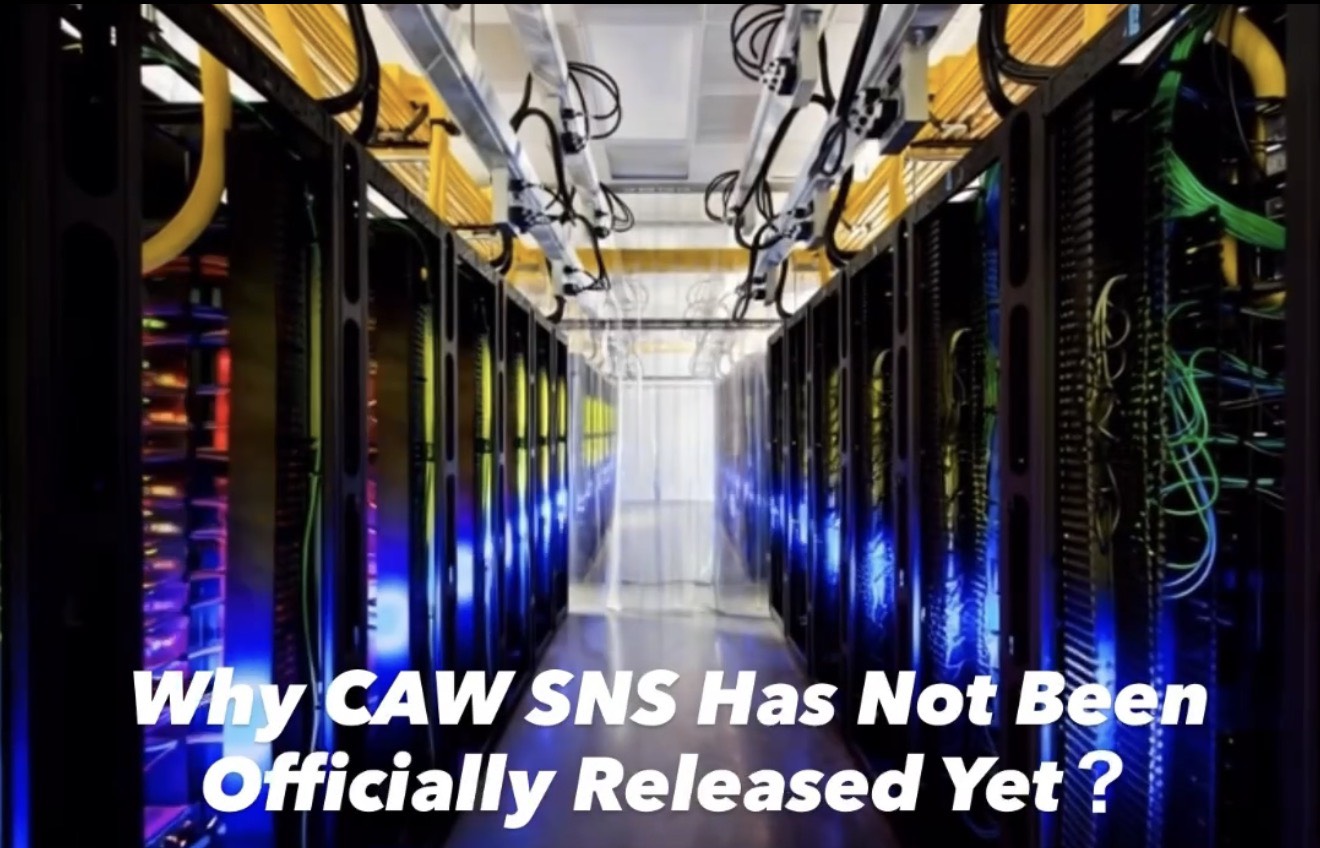
Running a global social platform — especially one integrated with blockchain and AI — requires hyperscale data-center capabilities.
We’re talking about infrastructure that can sustain billions of database reads, writes, and verifications per second.
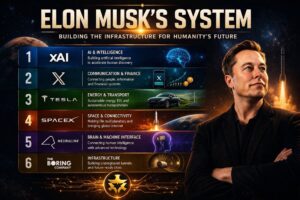
Only a few entities on Earth possess that capacity: Google, Amazon, Microsoft, and Elon Musk’s xAI.
Such data centers provide:
•Ultra-fast global backbone connectivity
•Petabyte-level distributed storage
•Massive GPU clusters for AI inference
•Redundant, self-healing server networks
•Independent energy generation and 24/7 cooling
Without such infrastructure, any “decentralized SNS” would collapse under its own weight.
Even a perfectly coded blockchain cannot overcome the laws of physics — latency, bandwidth, and energy consumption remain the ultimate limits.
⸻
- The Colossus Factor — Elon Musk’s AI Megastructure
Elon Musk’s xAI is currently constructing one of the largest AI data centers in the world: “Colossus” in Memphis, and its successor, Colossus-2.
These facilities are not ordinary server farms — they are integrated AI ecosystems, combining computation, energy, storage, and communication in one self-sustaining loop.
Colossus is already operational, powering AI workloads such as Grok.
Colossus-2, still under construction, aims to unify AI systems, blockchain data, and next-generation web applications within a single environment.
If CAW’s architecture indeed relies on synchronization between its AI and blockchain layers,
it would make perfect sense for its full release to coincide with the completion of Colossus-2.
The physical network must exist before the social layer can come alive.
- From an AI Perspective, Co-Location Is the Only Logical Path
For AI systems, latency is the ultimate enemy.
A few hundred kilometers of distance between an AI inference engine and a blockchain node can create milliseconds of delay — unacceptable for a system built on real-time interaction.
By placing both AI and blockchain components inside the same data-center network, CAW can achieve:
•Near-zero latency synchronization between inference and transaction
•Perfect data consistency without blockchain forks
•Dynamic load balancing controlled by AI
This is exactly the kind of architecture Elon Musk’s xAI is building —
an intelligent, self-optimizing data environment designed to host AI-driven applications like CAW.
⸻
- A Paradox That Works — Central Structure, Decentralized Spirit
CAW represents freedom, anonymity, and decentralization.
xAI represents structure, order, and optimization.
At first glance, these seem incompatible.
But in reality, they form a harmonious dual system —
one where AI provides the order, and blockchain ensures the freedom.
CAW’s “social consciousness” could emerge inside xAI’s “neural infrastructure.”
It’s not a contradiction — it’s an evolution.
Centralized efficiency sustains decentralized autonomy.
⸻
- The Silence Before Activation
From the outside, it looks like nothing is happening — a prolonged quiet.
But that silence may not signify stagnation; it may represent synchronization.
If CAW truly depends on xAI’s physical infrastructure, then its official release can only happen once Colossus-2 and its energy systems reach stable operation.
This aligns perfectly with Elon Musk’s pattern: launch minimal prototypes first, then scale once the infrastructure catches up.
In this sense, CAW’s “delay” might actually be strategic — waiting for the neural grid to come online.
⸻
- Conclusion — When All the Gears Finally Align
CAW’s social network may not be held back by code, but by infrastructure on a planetary scale.
It’s not about missing features — it’s about waiting for the birth of an entirely new digital nervous system.
Elon Musk builds the brain.
CAW becomes the consciousness within it.
And when both layers finally unite —
when all the gears align — the decentralized dream will awaken, powered by the most centralized engine humanity has ever built.
HODL!