**CAW × LayerZero:
Why This Integration Proves CAW Isn’t Just Another Meme Coin**
⸻
Prologue: Integration That Changes the Game
Most meme coins come and go, living fast and dying young.
They launch on a single chain, add liquidity, and rely purely on hype.
CAW (A Hunter’s Dream), however, is fundamentally different.
Its early integration with LayerZero — one of the most advanced cross-chain protocols in the world — signals that CAW isn’t operating on the same playing field as typical meme tokens.
⸻
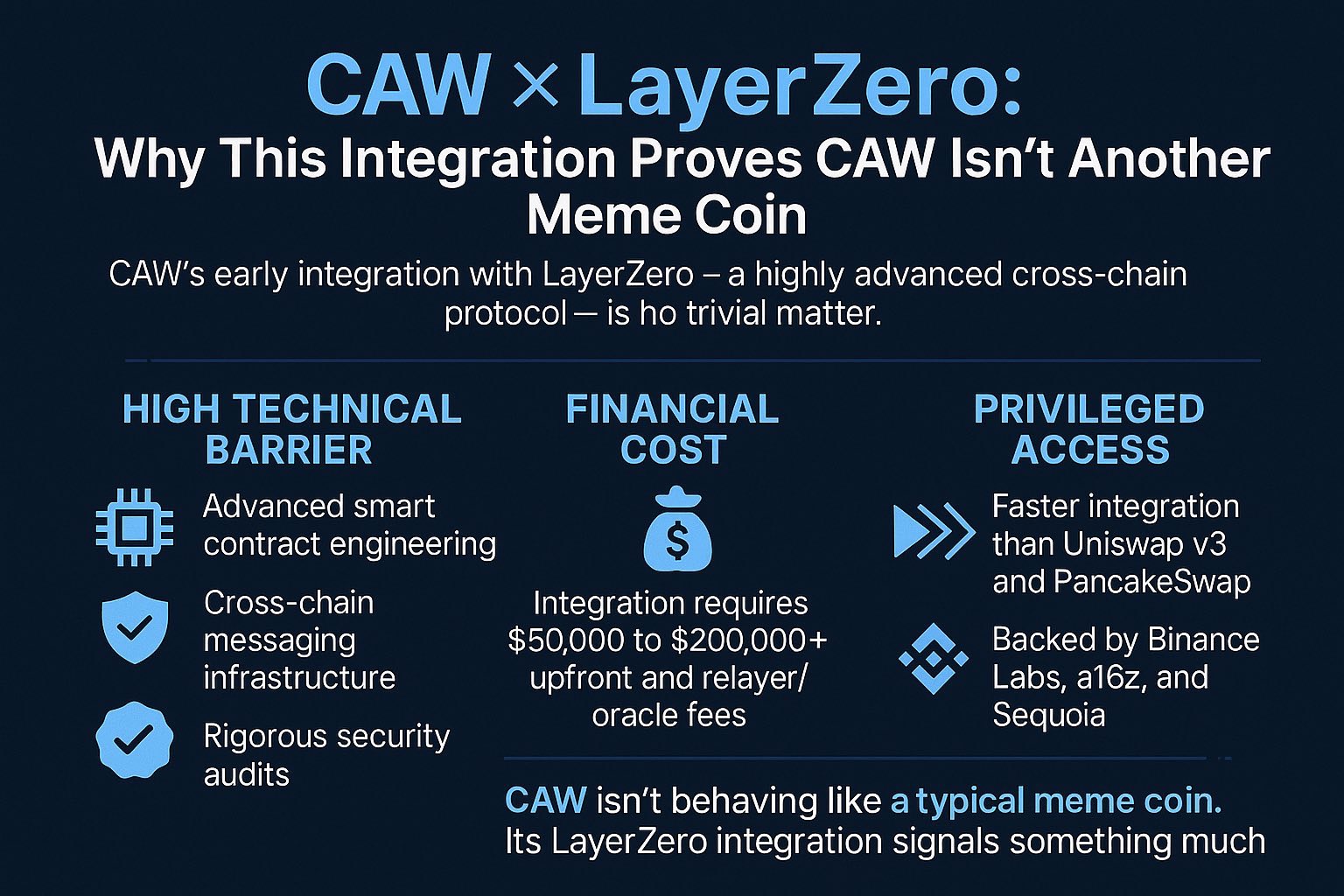
- The High Technical Barrier
Integrating LayerZero is not plug-and-play. It’s a complex, resource-heavy process that very few projects can achieve.
To fully implement CAW’s OFT (Omnichain Fungible Token) design, the team would need:
•Advanced smart contract engineering
Writing and testing contracts capable of maintaining synchronized token supplies across multiple chains.
•Cross-chain messaging infrastructure
Building fault-tolerant pathways to communicate seamlessly between blockchains.
•Rigorous security audits
One vulnerability could allow attackers to drain liquidity or mint infinite tokens, making multi-layer audits mandatory.
Meme tokens usually lack full-time developers, let alone elite engineers capable of handling cross-chain architecture.
CAW achieving this in early 2023 is an anomaly.
⸻
- The Financial Cost: Not for “Random Projects”
Beyond engineering, LayerZero integration requires capital.
•Initial Setup Costs
Negotiating integration directly with LayerZero often involves six-figure deals — typically $50,000 to $200,000+ depending on complexity.
•Ongoing Relayer & Oracle Fees
Every cross-chain transaction incurs fees paid to third-party relayers and oracles to ensure message integrity. These can accumulate tens of thousands of dollars per month for a high-volume network.
•Strategic Partnerships
LayerZero, backed by Binance Labs, a16z, and Sequoia, doesn’t just open the gates to anyone. Integrations are often selective, prioritizing projects aligned with long-term global adoption strategies.
For a “small meme coin” to afford this infrastructure and gain integration approval implies hidden funding or strategic backers.
⸻
- Privileged Access: Faster Than Industry Giants
Consider this timeline:
•Uniswap v3 integrated LayerZero in June 2023.
•PancakeSwap, Binance’s flagship DEX, came after that.
•CAW integrated LayerZero before both.
Even established giants required months of planning and auditing before deploying LayerZero.
For CAW to complete this ahead of industry leaders suggests privileged treatment — possibly through Binance’s influence, given its deep investment in LayerZero.
⸻
- Why CAW’s LayerZero Integration Matters
By integrating LayerZero, CAW effectively becomes an OFT — a token capable of existing natively across multiple chains without wrapped versions or liquidity fragmentation.
This unlocks:
•Seamless omnichain liquidity
CAW can move between Ethereum, Arbitrum, Base, and Optimism instantly.
•X App readiness
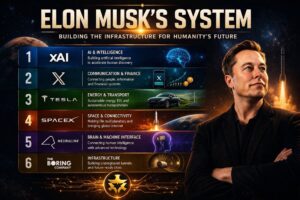
If CAW integrates with Elon Musk’s X Payments, cross-chain interoperability is non-negotiable. CAW is already designed for it.
•Institutional scalability
Projects without omnichain functionality risk obsolescence. CAW bypasses that entirely.
⸻
Conclusion: This Isn’t Meme Token Behavior
For most meme coins, LayerZero integration is impossible.
It demands elite engineering talent, significant funding, and access to one of the most selective cross-chain protocols in crypto.
CAW didn’t just integrate LayerZero —
it did so early, quietly, and ahead of global giants.
That’s not normal.
That’s a signal.
CAW is being built for something far bigger than retail speculation.
HODL!