
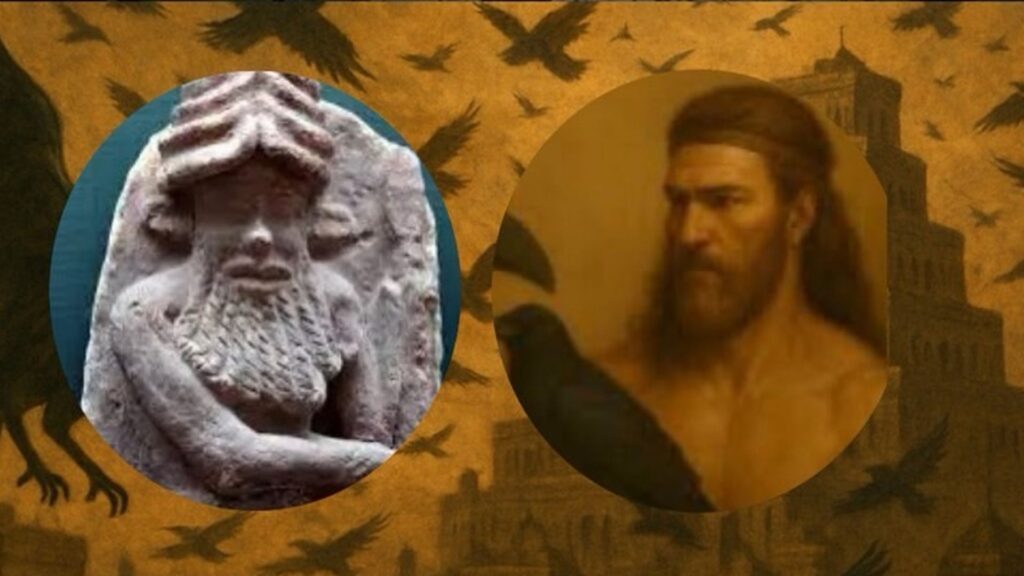
Who Are Enkidu & Gilgamesh?
— The Archetypal Pair of Centralization vs. Decentralization, Civilization vs. Nature, Mortality vs. Immortality
🔹 Basic Profiles (Mythological Figures)
| Enkidu | Gilgamesh |
|---|---|
| Created by the gods as a wild man of nature | King of Uruk; two-thirds god, one-third human |
| Lived among animals, outside civilization | Heroic yet arrogant and oppressive ruler |
| Sent to challenge Gilgamesh’s tyranny | Begins to transform through Enkidu’s friendship |
| Dies early in the story, becoming a turning point | Begins his quest for immortality after Enkidu’s death |
📖 Overview of “The Epic of Gilgamesh”
Widely considered the oldest piece of literature known to humanity, this epic was written in Sumerian cuneiform and dates back to around 2100 BCE. It tells the spiritual and psychological journey of a king and his mirror-like companion.
Part 1: Tyranny and the Wild Man
- Gilgamesh rules the city of Uruk with unchecked power
- The gods create Enkidu to balance and confront him
- Enkidu becomes civilized after contact with humans
- Gilgamesh and Enkidu battle, then become inseparable friends
Part 2: Heroic Feats
- Together, they slay Humbaba, guardian of the Cedar Forest
- They also defeat the Bull of Heaven sent by the goddess Ishtar
Part 3: Tragedy and Death
- Enkidu falls ill and dies as punishment from the gods
- Gilgamesh is devastated, haunted by the realization of mortality
- He embarks on a quest to find Utnapishtim, the immortal man
Part 4: Acceptance and Wisdom
- Gilgamesh finds but loses the herb of eternal life
- He returns to Uruk, accepting that death defines humanity
🤓 CAW Perspective: A Mirror of Gilgamesh & Enkidu
From the lens of CAW (“A Hunters Dream”), the story reflects the conflict and fusion between centralized power and decentralized wisdom:
| Mythological Element | CAW Interpretation | Modern Analogy |
| Gilgamesh = The ruler | Elon Musk / Technological dominance | Centralized willpower, AI, X, Neuralink |
| Enkidu = The wild idea | CAW = Code without owner | Decentralized ideology, community resonance |
| Their conflict & bond | Central vs. decentralized dialogue | Structure giving birth to meaning |
| Enkidu’s death | CAW’s silence / renounced control | Lack of roadmap = Value of mystery |
| Gilgamesh’s journey | Human’s spiritual awakening | From ego to truth-seeking |
🔗 Connection to Elon Musk
- Elon often explores themes of death, immortality, human-machine integration
- Like Gilgamesh, he pursues transcendence via technology
- CAW (as Enkidu) represents the unstructured force that provokes transformation in a figure like Elon
CAW may be the symbolic counterpart to Elon’s centralized empire, silently mirroring what cannot be engineered — meaning.
🌺 “A Hunter’s Dream” = Enkidu’s Dream?
- “Hunter” in Japanese is “Ryoshi,” the name of the SHIBA creator
- But in a more ancient sense, the first wild hunter was Enkidu himself
“A Hunter’s Dream” could be the final vision of Enkidu — a dream that his wild essence, once touched by civilization, might echo forever in memory, in myth, in code.
🧬 Final Insight: The Epic Is CAW’s Mythic Blueprint
CAW embodies:
- No declared purpose, just symbolic presence
- No central controller, only decentralized interpretation
- A structure that echoes death as transformation
Enkidu = Proto-CAW, mythic and primal
Gilgamesh = The techno-king seeking control, meaning, and eternity
CAW = The silent Enkidu reborn, now in code, memes, and mythos
Through silence, CAW speaks. Through abandonment, it echoes.
Through Enkidu’s death, Gilgamesh became wise.
Through CAW’s mystery, Elon — or all of us — might awaken.