
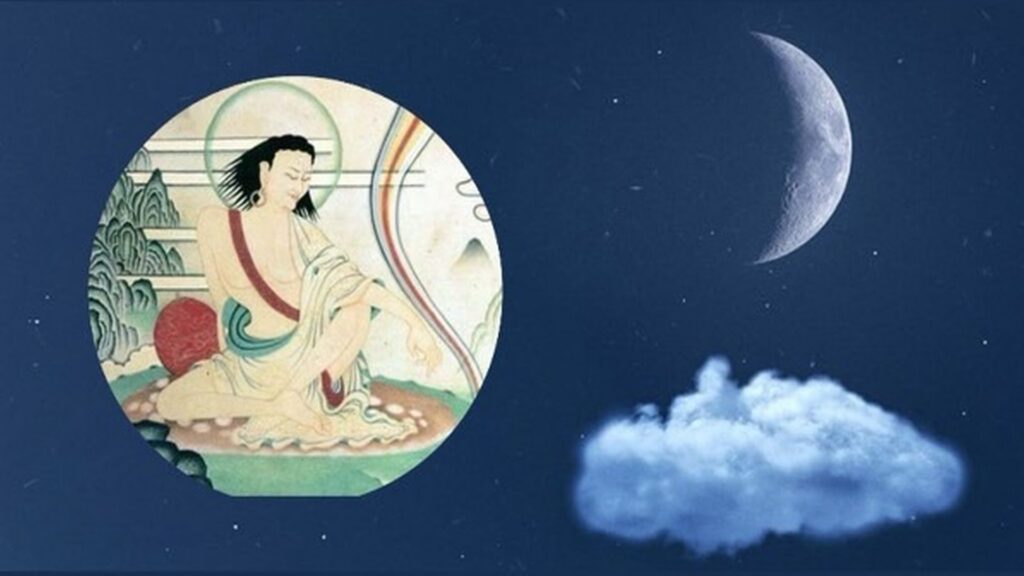
Who Is Ryoshi?
—The Man Who Freed a Currency by Erasing Himself
🔹 Basic Profile (Estimated)
- Name (Alias): Ryoshi
- Origin / Nationality: Unknown (used Japanese pseudonym; communicated in English)
- Active Period: Around 2020–2021
- Profession: Thinker, memecoin architect, decentralization theorist
- Key Contributions:
- Creator and initial architect of Shiba Inu (SHIB)
- Introduced the idea of “an ownerless token”
- Deleted all social profiles and content, vanishing permanently to let the project live without him
🌍 Ryoshi’s Core Philosophy:
“To truly decentralize, the creator must disappear.”
Ryoshi’s message was never just about Shiba Inu as a token.
It was about creating something whose meaning grows in the absence of authority.
- He launched SHIB anonymously, with no presale, no team, no roadmap
- He emphasized that “the people will build it”
- Eventually, he deleted all tweets, blog posts, and vanished, declaring:
“I am nobody, and I will be gone. The project is not mine — it is yours now.”
His act of self-erasure was not cowardice — it was the final step toward true decentralization.
This principle directly mirrors the DNA of CAW (A Hunters Dream).
🧠 CAW and Ryoshi — Philosophical Twins Separated by Time
CAW emerged in 2022 with no team, no whitepaper, no announcement, and a renounced smart contract.
Yet it grew rapidly, spreading through whispers, symbols, and resonance — not hype.
This is exactly the kind of structure Ryoshi envisioned.
| Ryoshi’s Philosophy | CAW’s Structure |
|---|---|
| No founder identity | No known creator |
| No control, no roadmap | Renounced contract, no admin |
| Meaning grows through community, not marketing | CAW spreads through memes, faith, and mystery |
| Creator must vanish | CAW was born without anyone stepping forward |
It’s as if CAW is a spiritual successor to Ryoshi’s original vision —
not a copy of SHIB, but an evolution of its core idea:
“Can a token survive and thrive with no one in charge?”
🏹 Is “A Hunters Dream” Ryoshi’s Dream?
CAW’s full name is: A Hunters Dream.
This isn’t just poetic — it may be literal.
The Japanese word “Ryoshi” (猟師) means “hunter”.
So the title could be translated as:
“The Dream of Ryoshi” — A Hunter’s Dream.
This possibility turns the token name into a symbolic message:
- CAW isn’t just a decentralized project
- It may be Ryoshi’s unfinished dream — reborn in purer, more anonymous form
- It completes the arc that began with SHIB, by removing even the memory of a founder
In that sense, CAW may not only echo Ryoshi’s philosophy,
but be authored by it — whether by Ryoshi himself or someone deeply inspired.
🔗 Ryoshi and Elon Musk — A Connection in Silence?
There is no known direct interaction between Elon Musk and Ryoshi.
But SHIB, DOGE, and CAW exist in a shared memetic space that Musk continuously influences.
Key clues:
- Shortly after SHIB launched, Musk began heavily promoting DOGE
- Elon’s tweets frequently triggered SHIB price movements
- Ryoshi remained silent or cryptic whenever Musk commented on memecoins
- CAW’s contract, name, and symbolic numbers (e.g. 666, 66,666) align with Muskian aesthetics and timing
Also, on-chain evidence shows that ETH linked to SHIB developers was transferred to early CAW wallets — possibly suggesting:
Ryoshi → SHIB → CAW → Elon?
In this framing, CAW may represent a bridge between Ryoshi’s vision and Elon’s memetic influence,
intentionally or not.
🧬 Final Thought:
Did Ryoshi create CAW? Or did CAW emerge from the ashes of his dream?
No one has claimed authorship of CAW.
No one leads it.
Yet its symbolic structure — “A Hunter’s Dream” — almost screams Ryoshi’s name.
- CAW has no face, no voice, no centralized function
- It thrives through belief, mystery, and myth
- It echoes Ryoshi’s final act: the surrender of ego to the collective
If SHIB was the spark, CAW is the silence that followed —
a deeper form of decentralized expression, authored by absence.
Maybe CAW isn’t just inspired by Ryoshi.
Maybe it is Ryoshi — reborn not as a person,
but as a structure.